Showing posts with label branding. Show all posts

Thursday, June 16, 2011

Addicted to Metrics: The First Step is Admitting There’s a Problem


The first step in any well-respected recovery program is admitting there’s a problem. 

When it comes to business-to-business marketing and monitoring social media metrics, this serves as public admittance of a potential problem.

The smarty-pants at Hootsuite, the social media management application, now offer robust reporting metrics showcasing the return on investment and value of social media marketing for Twitter.  (They offer this reporting for Facebook as well, but I’m not actively managing client social media on that platform, thus don’t run FB reports.)

In the case of Twitter, real-time reports show relevance of Twitter followers, usefulness of Tweets, and number of followers who click through any links embedded into a Tweet, along with other addictive analytics.
Most Popular Links
Over the last few months, one report has become extremely addictive. 


The “most popular links” summary shows the number of click throughs followers take for anytime a link is embedded in a tweet.

As more clients request social media management of b-to-b Tweet streams, the more this addiction will get out of control.

Got Relevance?
In my mind, no matter the client, the report serves as a key way to measure relevance on Twitter.  

Another way of looking at the report is that it demonstrates that the higher the click through (Ie higher the number of people who click on the link), the more the content resonated with followers.  

As long as a Twitter program stays on topic; is consistent in frequency of Tweets; includes key words and hash tags related to the topic, and as long as the account has built a following of relevant followers, the “most popular links” report should be a joy to read.

There are so many important reasons to be thoughtful and strategic in social media management.  In business-to-business social media programs, the focus is on connecting and relating to like-minded folks, thought leaders, potential prospects, etc. in a professional way.  (Of course, I’m making the assumption that this is the overall goal…many folks have gotten into big trouble when using Twitter for other more sensational reasons, like celebrities and certain members of the US Congress) 

Simply put, tweets and comments must stay on topic to attract relevant followers. 


In Search of Value
Think of it this way:  if you signed up for a conference or webinar about the latest industry trends in physical therapy, why on earth would a presenter stand up and devote a presentation to thoughts about movies, what they ate for dinner, or what funny thing their kid did yesterday? Why would the attendees find this content of value? And what motivation would participants have to connect, engage, or pass along this kind of irrelevant information?

There are other social media outlets for that kind of sharing other than a business-to-business Tweet account.

A Better Way
These useful reports show the value in staying strategic when B-to-B Tweeting. 


Attract a relevant community. Stay on topic to those who found you.  Cultivate a relevant following via consistent management; share information of relevance that offers context; reach out and connect to other relevant folks; and measure the effectiveness of such an engagement.

Now I’ve got to close this post up  – it’s been a day since I ran that Hootsuite “most popular links” analysis and I’ve got an itchy Twitter finger! 


Tuesday, April 26, 2011

An Error Page Error: How Hootsuite Missed the Mark on Effective Marketing Communications

I use Hootsuite daily. 

You likely know that Hootsuite is a useful social media dashboard application.  It helps manage client’s multiple social networks from one website.

Specifically, I spend a few hours each week writing relevant Tweets of interest, and scheduling updates to my client’s Twitter account, as explained in previous blog postings.

You might also know that late last week, Hootsuite was one of the applications that was affected by a severe service outage.  Hootsuite crashed for almost a full business day.

How Did The Crash Happen?
I’m over-simplifying here, but here’s how I understand it. Hootsuite is one of several applications that use Amazon web services and databases to provide “cloud computing” capability so users can log onto the applications from the cloud. 

There was a total, unforeseen failure of Amazon's web services and database functionality (not the Amazon site itself, but their web services). Unfortunately all recovery or fail-safe strategies crashed as well.

Other popular websites and services that went dark that day were Reddit and Foursquare. They were crippled or outright disabled well into the early afternoon.


A Marketing Communications Challenge
My concern in this post is a little more mundane, but relates to marketing communications.  

Hour after hour, as I tried to unsuccessfully log in to Hootsuite, what was displayed was very snarky error page.  (pasted above). 

More than snarky, it was downright rude.  As the error page said in multiple languages:   “Owls need a break sometimes, too. We’ll be back in action, but in the meantime go outside and flap your wings around, you may find that flying aint’ very easy.”

Granted, after about five or so hours a more professional and “Kinder” error page was displayed, but this one really missed the mark.

Missed Opportunity for Positive Branding

The error page bugged me every time it was displayed.  

It created a certain perception about Hootsuite's service and brand.

Even though it wasn’t a critical situation by any means (nobody died), I lost a few hours worth of work since the outage resulted in losing 4 or 5 days worth of Tweets scheduled in advance.

So here’s to paying attention to content on an error page.  Seeing a directive to “go outside and flap your wings around” set quite a negative and dismissive tone, and wasn’t an effective use of positive branding or marketing communications.


Monday, April 11, 2011

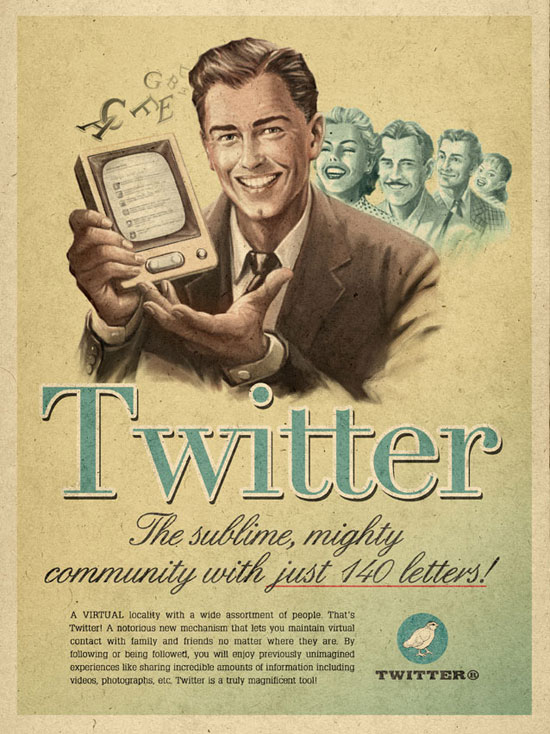
Twitter as a Brand Expression: 5 Tips for Effective Branding Using Twitter

This is a topic I’ve been mulling over for some time, but how to begin? 

The most useful place to start is to talk about the term “brand” so let’s begin with that.

What is a brand? 

A generally accepted definition of the term “brand” is “the emotional relationship a product, company, organization or even person has with their customers, audiences, consumers, community.” 

This is a definition modified from several sources including Marketingspot.

B-to-B Branding
In terms of business-to-business marketing, a brand elicits thoughts, perceptions, emotions, and responses from business customers. 

Responses are based on many key elements such as the product/service itself, the company reputation, the company history, the logo, the website, product packaging, the company employees, news articles, etc. 

(Quick side note – remember that logos are not the same as brands.  In fact they are design representations of a brand.  In a way, they serve as a brand “symbol” when they are created effectively.)

Twitter as a Branding Tool
So how can business-to-business marketers use Twitter as a branding tool?

A previous blog post about the basics of Twitter etiquette made the case that “a brand is a collection of perceptions in the mind of your prospect. A Tweet stream contributes to that perception.  It’s wise to operate within the constructs of common courtesy to lock in positive branding. Your Tweets are a reflection of your brand!


5 Tips for Effective Branding
To explore this concept more thoroughly, here are 5 Tips for Effective Branding via Twitter.


1)    Do the hard work first.  A Twitter or social media program can only reinforce your brand if you’ve taken the time to develop one in the first place.  Is your organization striving for a “thought leadership” brand?  If that makes sense for you, then Tweets can reflect cutting edge information, leading industry trends, and other materials supporting that brand image.  But you can’t be effective until you have a sense of the brand.   Are you hoping to brand the company as a leading edge innovator?  Then Tweets should reinforce that brand image by directing followers to innovation success stories, accolades and awards for innovation, breaking news of other innovators in the marketplace, etc. Again, this only makes sense if that branding work was done beforehand.

2)    Be Consistent.  Branding must be consistent across all media and programs.  As an example, a financial consultant might use print and online ads and its website to portray a conservative and trustworthy brand. Thus it wouldn’t make sense for the financial advisor to Tweet goofy jokes or off color comments, personal observations about the weather, Charlie Sheen or unrelated topics.  Be human, yes, but don’t go off-brand. The advisor’s tweet stream should reinforce a consistent brand image that relates to other programs.

3)    Use common sense. Courtesy goes a long way.  This was covered in another post, but it is worth repeating.  Mind your manners!   Don’t be reckless, use profanity, or insult.  That makes a terrible brand impression! Don’t Tweet or post when angry. Refrain from being intoxicated when Tweeting, as many organizations have learned.

4)     Be timely.  This is a pet peeve. What does it say about a business consultant’s “brand” when the Twitter feed hasn’t been updated in over 12 months?  It doesn’t say anything good that is for sure.   If you start a social media marketing program, by all means maintain it in a timely fashion.  It is a detriment to the brand if a blog, Twitter account, or Facebook goes through a ‘set it and forget it” process, and the last post was over a year ago.


5)    Be thoughtful.  It is a mystery to me why so many business to business companies don’t take time to draft an effective Twitter biography profile.  Many also neglect to include their website’s URL. Other relevant followers search Twitter bios using keywords when looking for folks to follow.  If a corporate trainer, for instance, leaves the bio blank, or doesn’t use keywords in the bio like “training’ “corporate training” “learning workshops”, they are missing out on a great branding opportunity.


 Parting Thoughts
A brand is the foundation of all marketing activities. 

It takes thought and effort, but social media marketing can effectively reinforce your brand, and deliver a favorable perception in the mind of your prospect.